
Guildford Artists take part in AppArt 2026 at King Edward’s School, Witley.
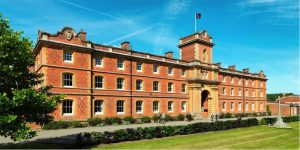
In 1994, an Arts for Everyone grant kick-started an Arts Festival at King Edward’s School. 31 years and three venues later, that is still the underlying mission of AppArt. Our annual Easter Art Exhibition and Sculpture Trail has always been free for anyone to attend, and local Schools are invited to see some of the artwork before the main exhibition opens to the public. AppArt continues its tradition of having a very eclectic mix of artworks, so there is something for everyone to experience and enjoy. The venue is again King Edward’s School, Witley and the event has grown into one of the major art exhibitions in the South East of England.
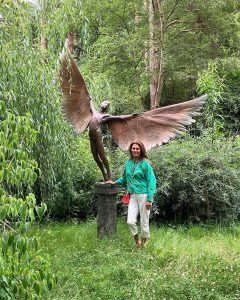
AppArt is honoured that local sculptor Nicola Godden has agreed to exhibit and open AppArt 2026 at our Private View on Good Friday (3rd April 2026).
Nicola has been creating major works for nearly 40 years. She works in clay or plaster for bronze casting. She is well known for her series of sculptures featuring Icarus, which first appeared at the London Olympic Games.
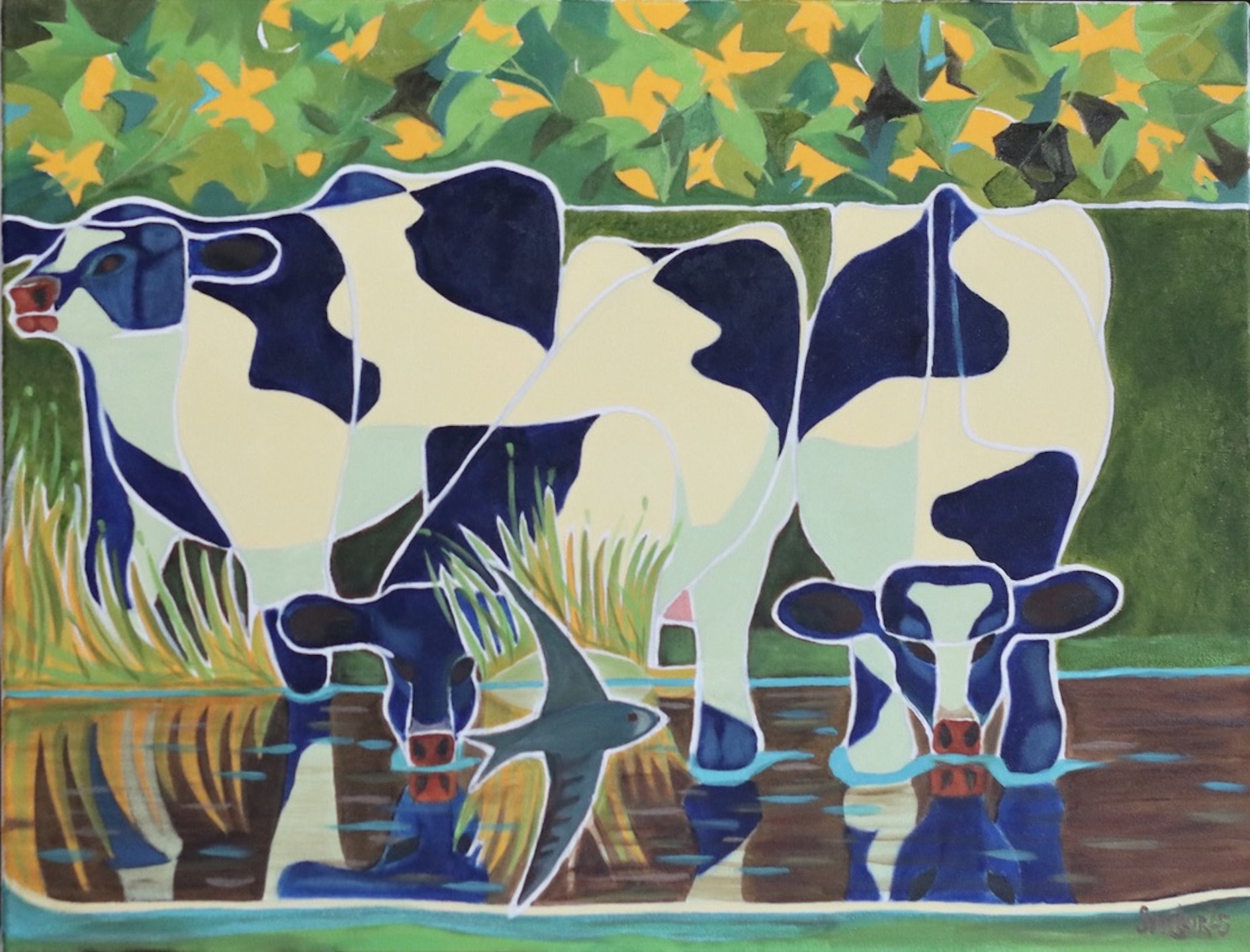
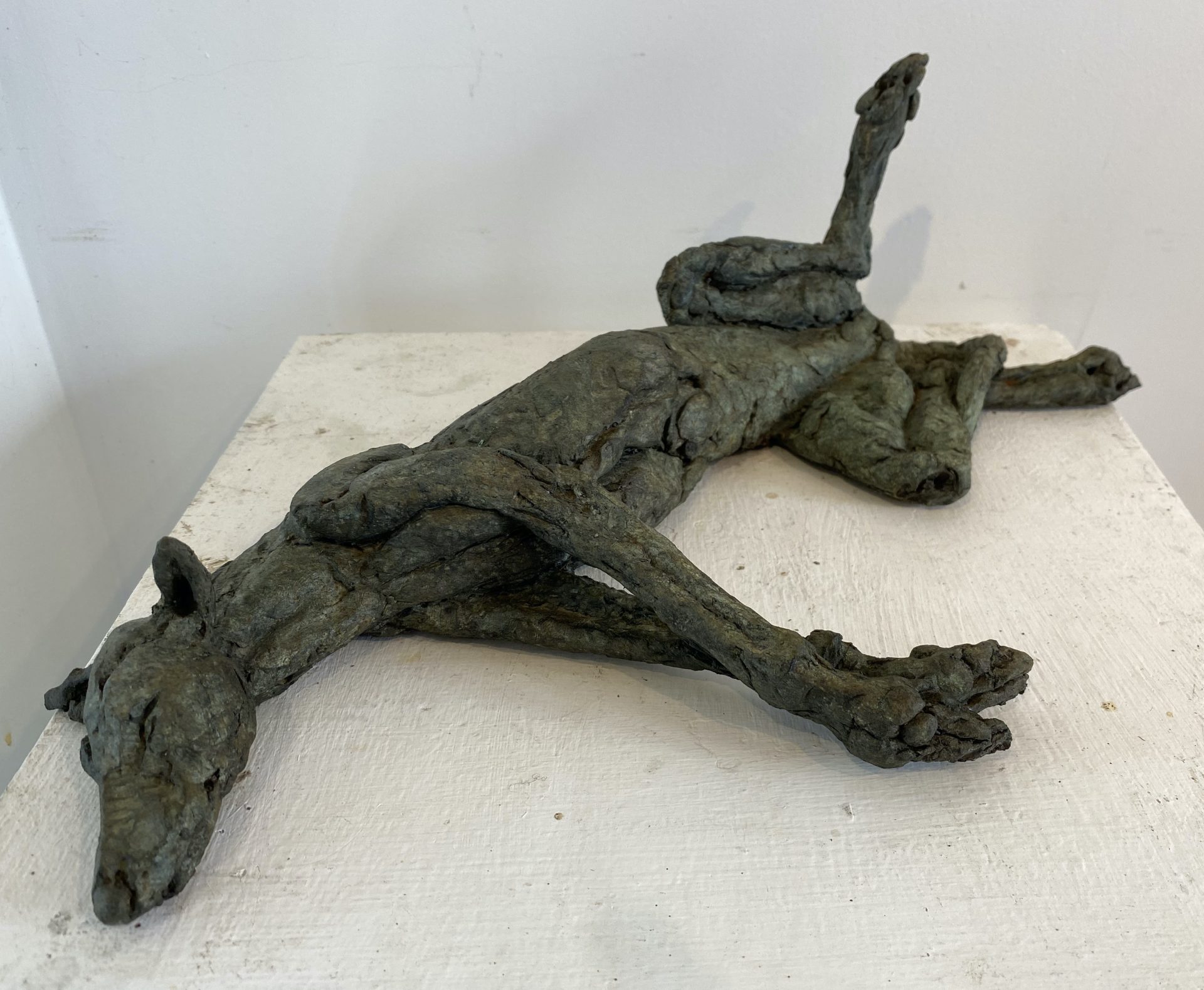
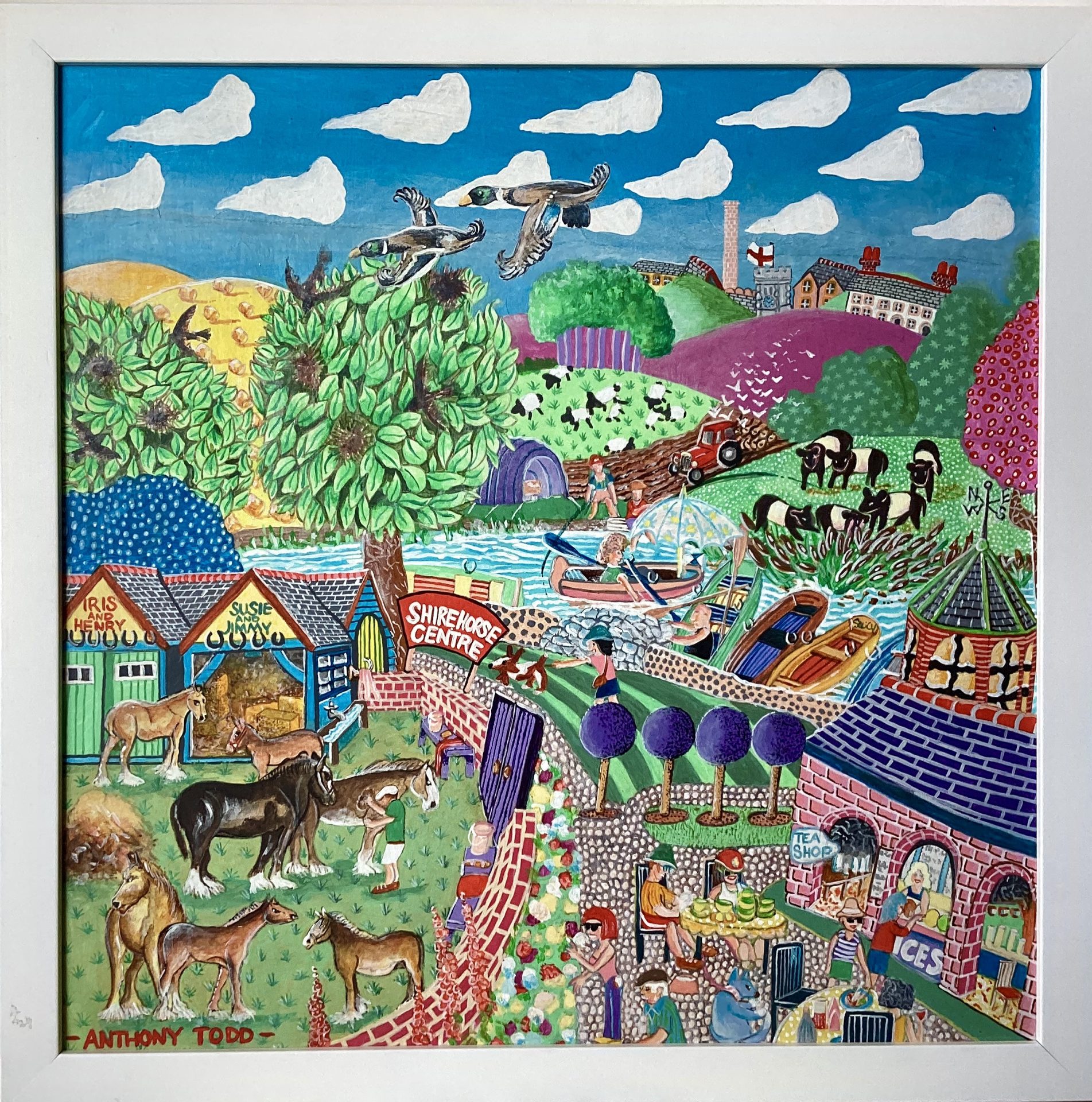 There are many talented artists in the Guildford area, and they use a variety of media and styles. Sinclair Webster’s art has been influenced by Flemish and German Expressionism. Flemish Expressionism leaned towards rural life, spirituality, and earthy tones, though both movements used expressive brushwork, as you can see in Sinclair’s rural scene of Friesian cows drinking at a stream. The title is aptly named “Summer Sip.” Tony Todd’s work often features animals and birds, and his latest painting features “Shire horses.” These gentle giants remain on the endangered species list, with only about 500 surviving today. Tony loves painting them, and his idiosyncratic style, with brilliant, bold colours and naiveté, works well with these lovely animals. It is “All Too Much” for Carol Orwin’s latest sculpture. This features a reclining, totally overwhelmed dog recovering after an active walk. Carol’s observations of the structure and pose of this canine creature completely capture the moment.
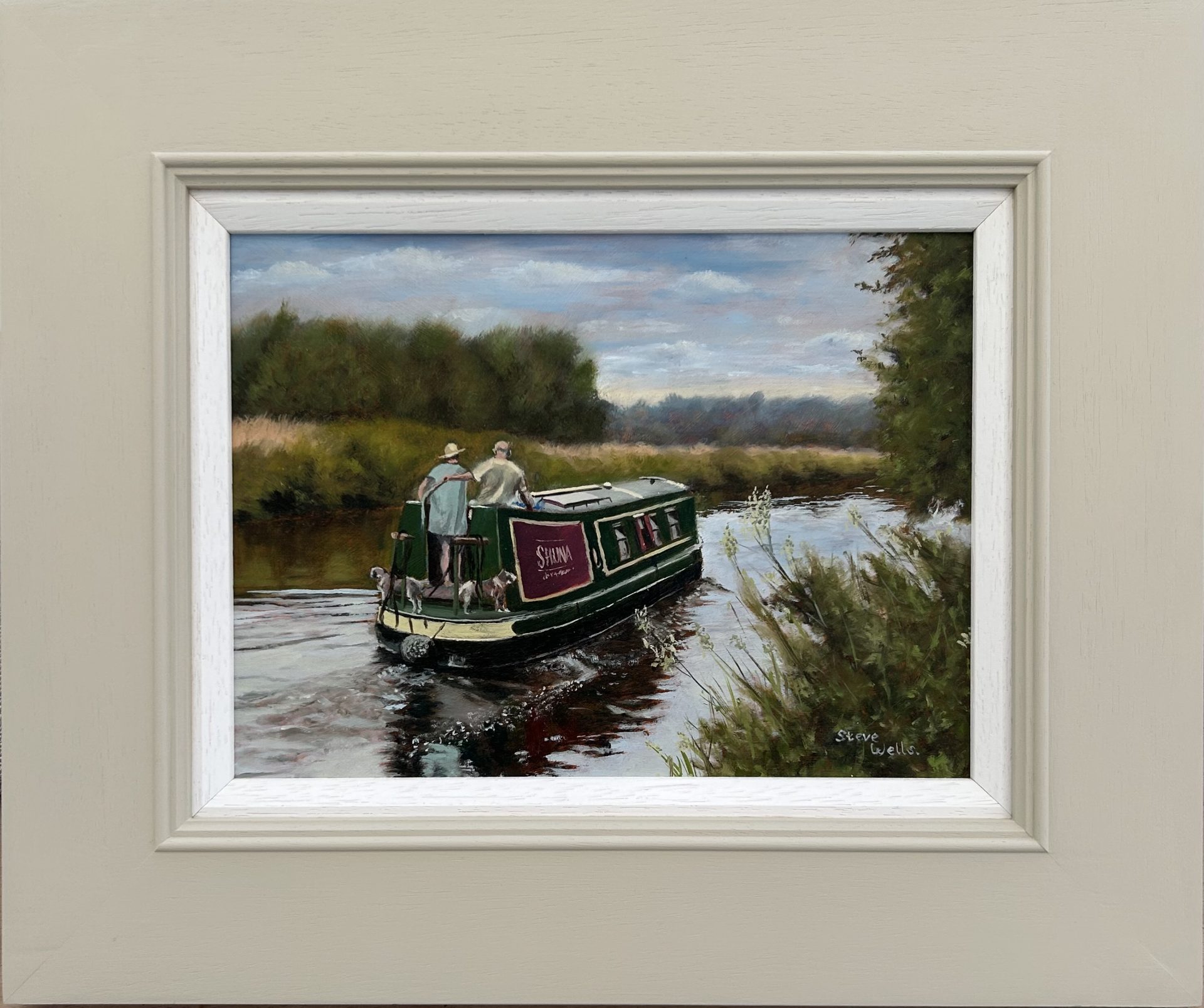
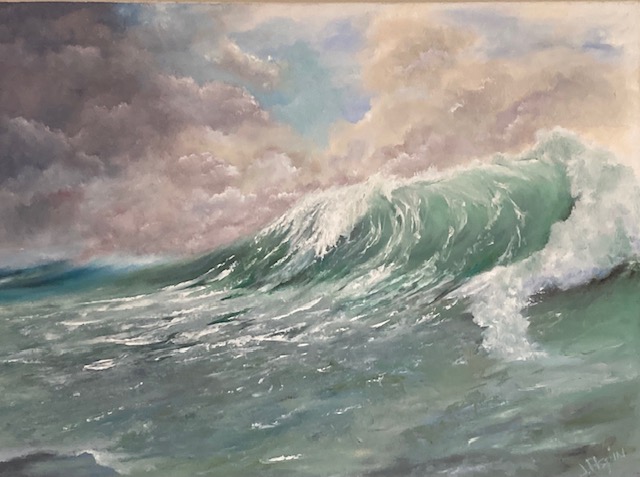
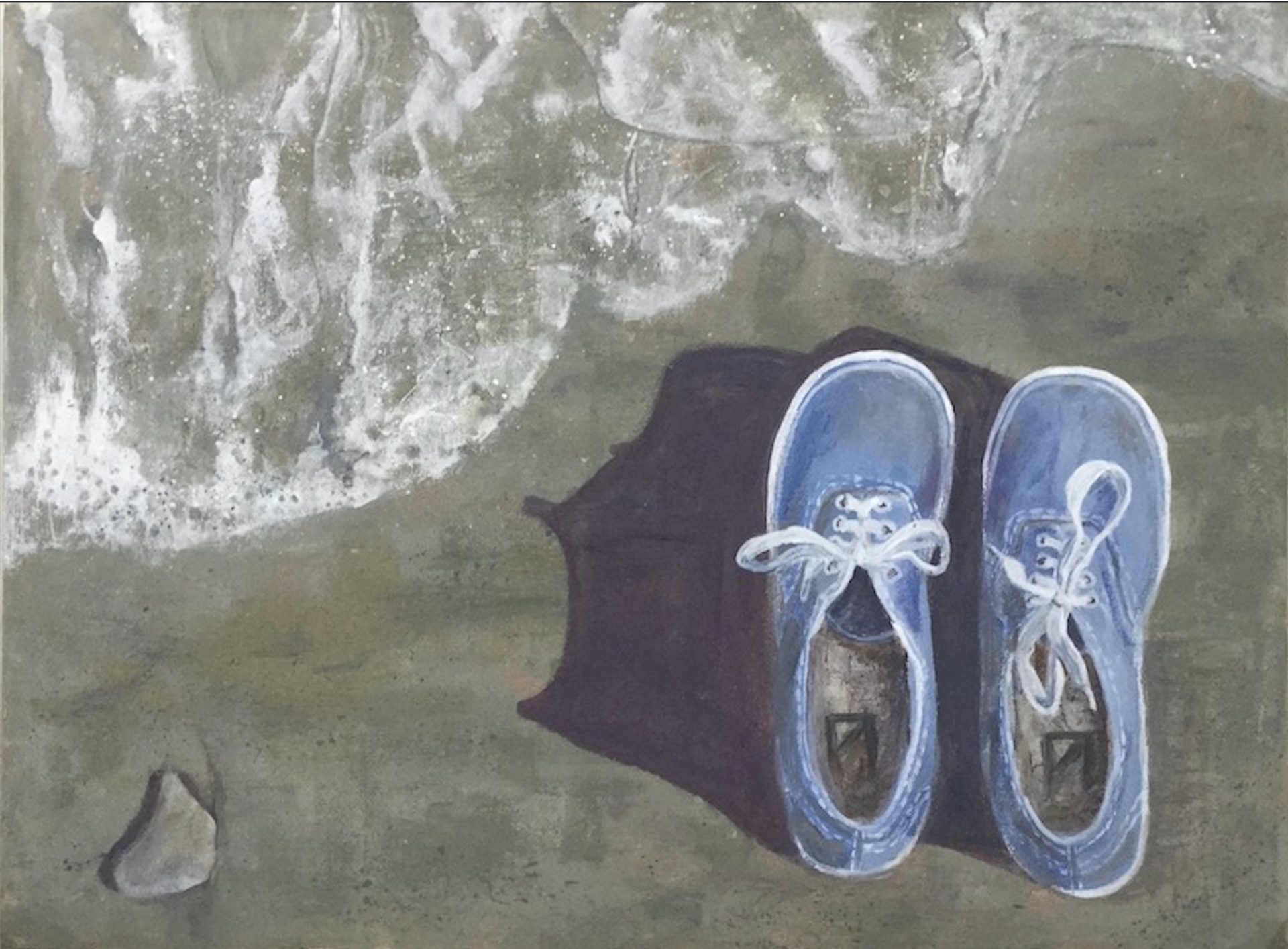 Water is a common theme among several artists. Steve Wells captures a familiar local scene of a couple and their two dogs enjoying “Cruising” on a canal. His oil landscape encapsulates this rural scene, and he cleverly conveys the boat’s movement. There is no need to guess what is happening in Sue Hinton’s acrylic painting “On the Beach.” The pair of shoes near the sea is a sure giveaway of what is happening off-canvas. A more tempestuous work is provided by Julie Aspin. Her stormy scene and rolling whitecap are dramatic but will eventually “Fade to Foam.”
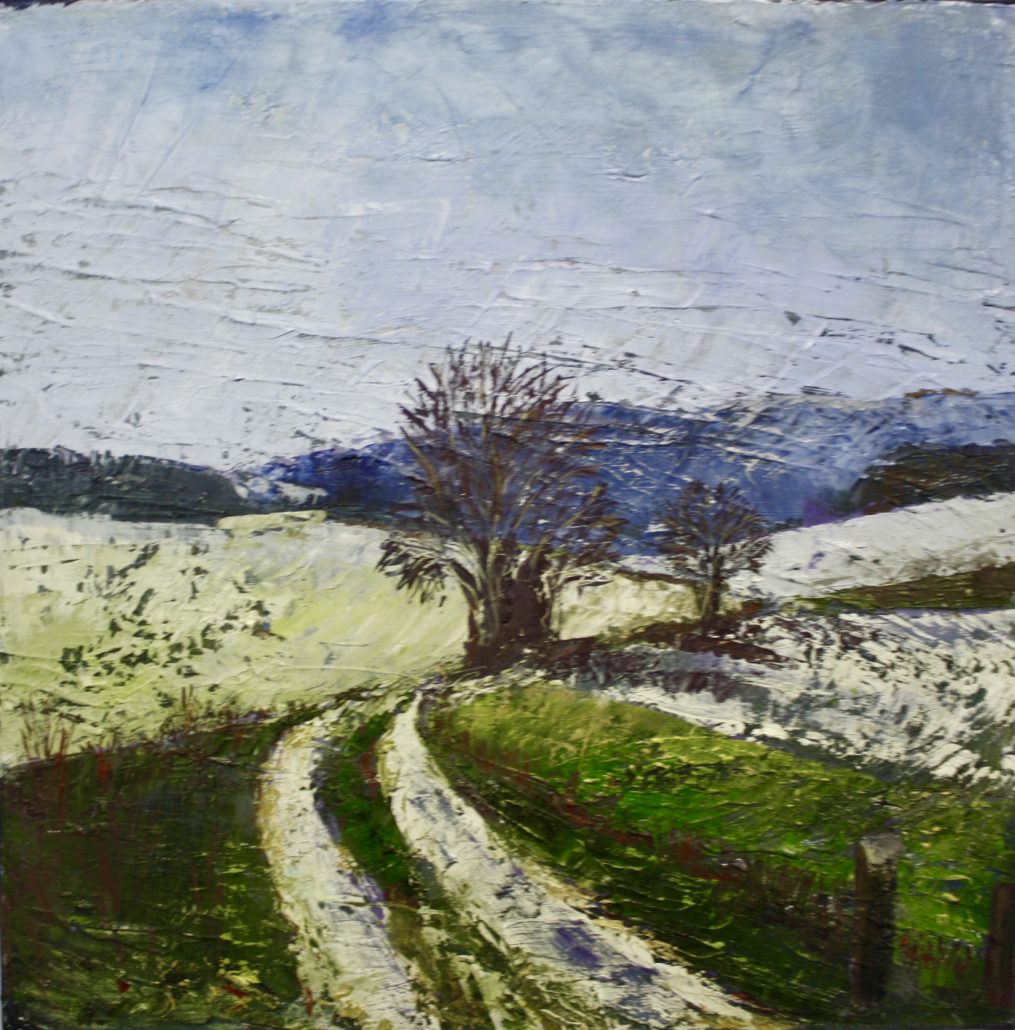
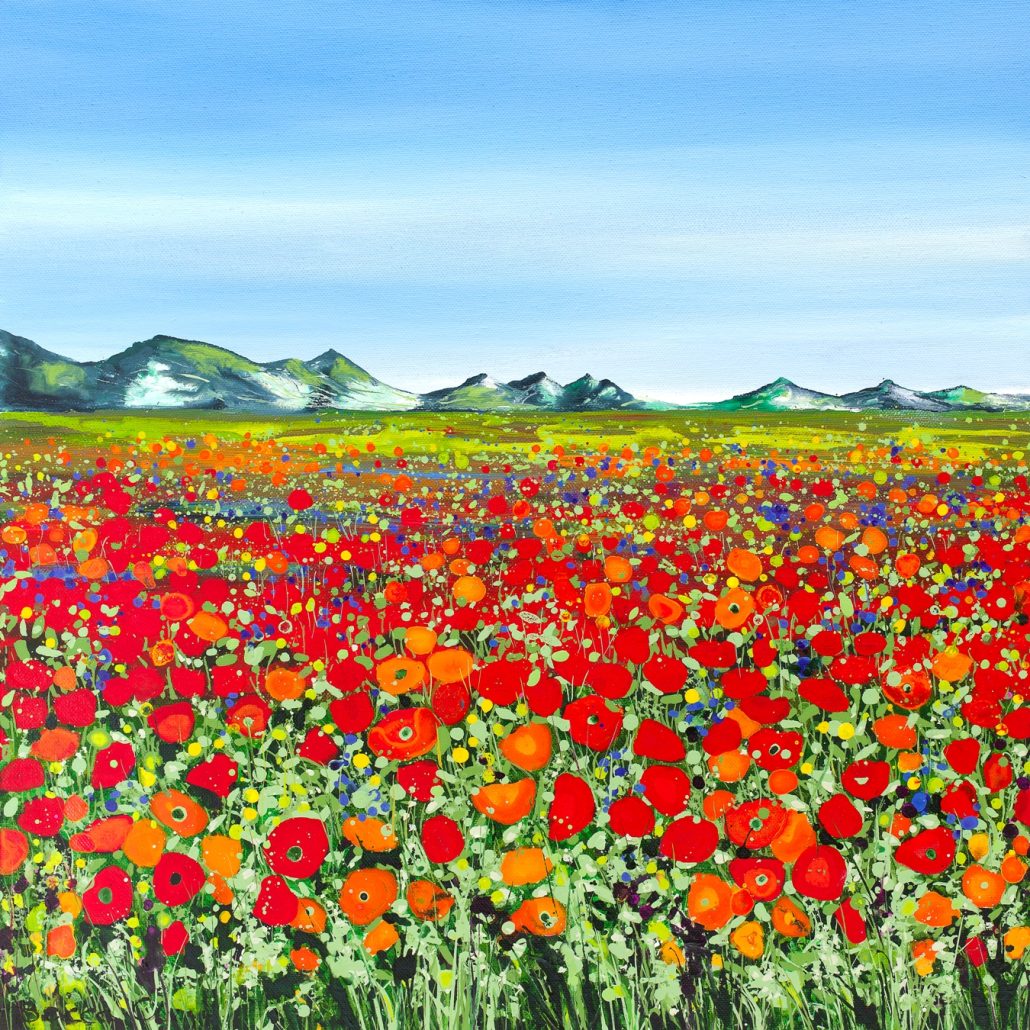
Different seasons are represented by Alison Harding and Becca Clegg. Alison’s observation of wintry scenes is shown in her oil painting “Winter Fields.” This bold, textured painting conveys the bleakness of this snow-swept scene. In stark contrast, Becca is drawn to unique and beautiful landscapes such as those in Umbria, where poppies and wildflowers grow amid picturesque mountains and towns. Her acrylic paintings are inspired by landscapes of one kind or another, and she particularly loves flowers: a mass of them in fields, where they blur into great big brushstrokes in the distance. “Italian Red and Orange Poppies” is an explosion of colour in contrast to the mountains in the background.
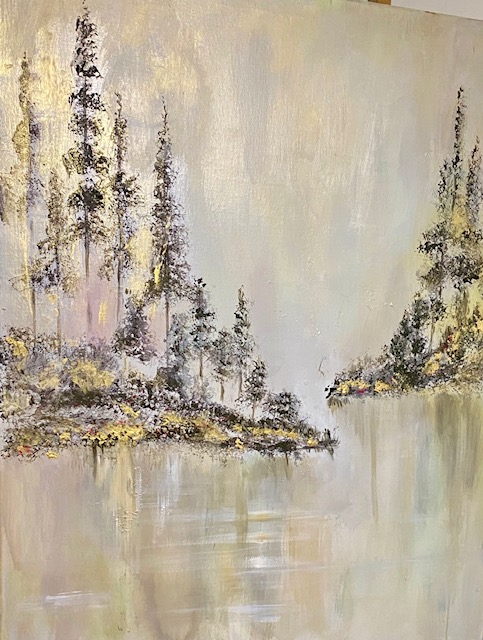
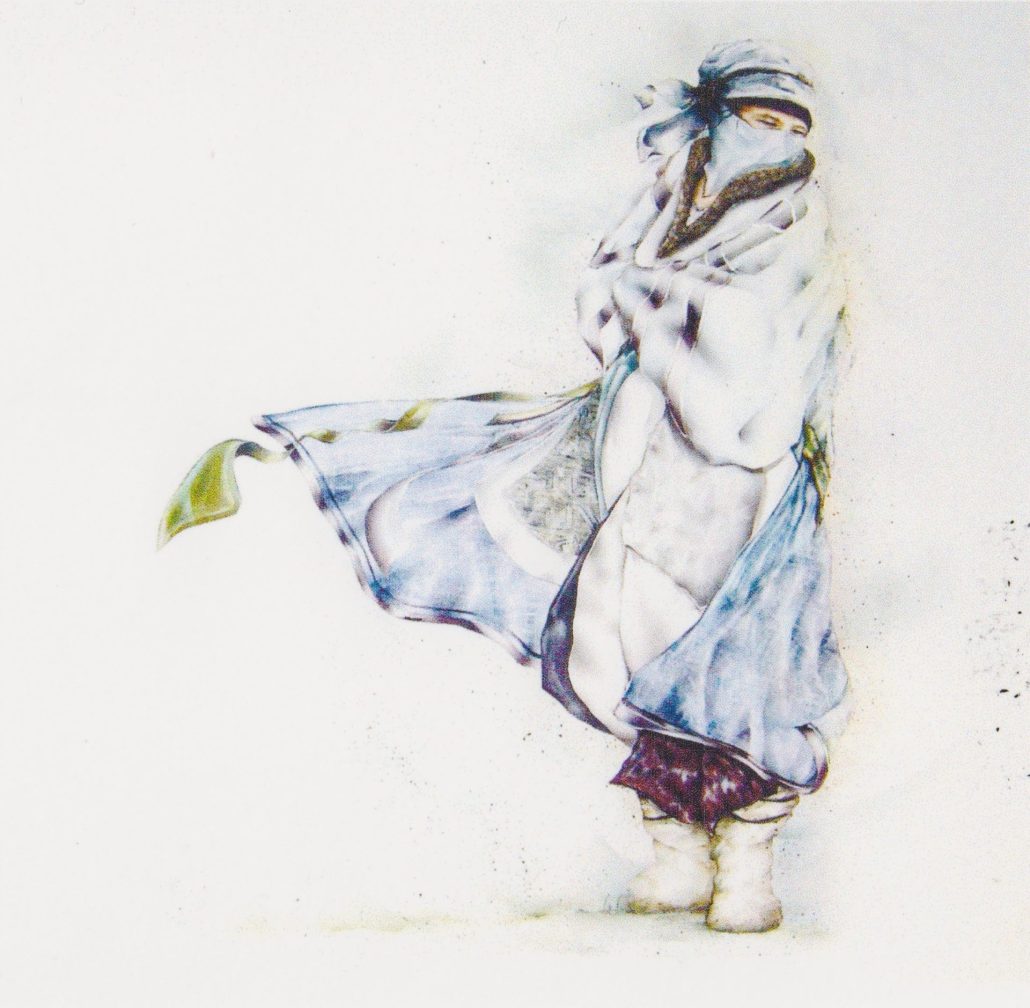
Ingrid Skoglund works unconventionally with various media to produce unexpected and unpredictable effects, and she rarely uses a brush. Ingrid often works with acrylic and silicone oil – pushing the mix around with a hot hairdryer and finishing off with a blow torch. All her art is unique, given her technique, and this year her painting “Song of Silence” could be construed as a misty still forest scene? Katherine Peake works with lightfast acrylic paint and an air brush. “The Veil” is a slightly mysterious study of a feminine figure, viewed differently by many as either a snowy or a desert scene.


Share this entry